The Numerical Input
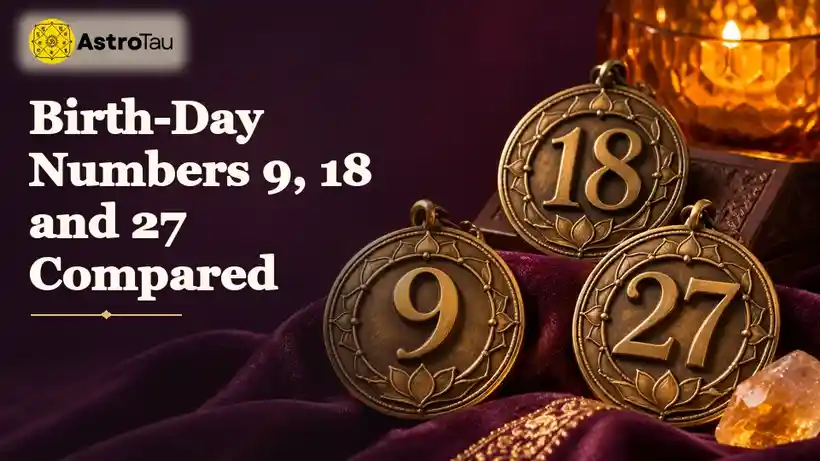
Birth days 9, 18 and 27 share a root of 9 under repeated digit addition.
The Calculation
Write 9, 1+8=9 and 2+7=9 on separate lines. Then compare how a root-only source and a compound source would record them.
Different Calculation Conventions
A full-date Life Path calculation may give a different result from all three. For a closer comparison, return to the example in “Use the Same Root in Two Different Types of Calculation” below. It is useful to keep the starting situation visible and write the single condition you would vary. The comparison involves what changed after that adjustment before giving the result a broader meaning.
How a Birthday Can Share a Digit
Under a day-number convention 9, 18 and 27 all reduce to 9. A full-date method adds the month and year, so a person born on the 18th can get a different result for the full date. It is useful to keep the three compounds as written if the source assigns them separate meanings. For a practical reflection about contribution, decide who would benefit from one action and what they need. The comparison involves the response with the intended outcome before treating a shared root as a shared disposition.
Calculation Where the Day and Date Totals Differ
For example, 18 January 2000 has a day number of 18, with a root of 9. Its written date digits give 1 + 8 + 0 + 1 + 2 + 0 + 0 + 0 = 12, which reduces to 3. The numbers describe different inputs. A comparison with someone born on the 27th should specify whether the discussion is about day values or full dates. If retaining compounds, keep 18 and 12 visible before interpreting either root.
Role of the Input
A birth-day number describes the calendar day alone. A full-date calculation adds information from the month and year. A name-based result uses the letters selected by its mapping rule. Put equal roots from different inputs on separate lines so their equality does not hide how each was obtained.
Symbolism in Daily Life
Choose one situation relevant to the theme described above and define an observation. For example, write the decision being made, who can make it and what would indicate a good outcome. One approach is to use the symbol to name a question, then answer it with the actual information available in that setting.
Calculation Consistency
Hand the written input and rule to another person without the answer. The comparison involves each sum before comparing meanings. If a calculator normalizes spelling or date format, review the value it used. The relevant information includes a practical next step separately from the numeric interpretation so you can test that step independently.
Same Root in Two Different Types of Calculation
A day number of 18 reduces to 9, as does a day number of 27. But for 18 January 2000 the full date adds to 12, which reduces to 3. A comparison between those results should specify whether the input is the birth day or a complete date. A reader who keeps the compounds can also distinguish 18 from 27 before they reach 9. Put the input, unreduced total and root in separate columns so another reader can check where both similarities and differences arose.
Intermediate Result a Reader Can Reproduce
Write the input in its original form and then in the form the chosen method actually uses. Mark each digit or letter that contributes to the total. If a method preserves a compound value, keep it beside any reduced value instead of reporting only the final result. Try the same input with one documented change, such as a spelling variant or different date component. The relevant information includes which step changed before discussing meaning. A reader should be able to review the calculation even when they prefer to interpret the symbolism differently.
Calculation Method
Repeat the worked example by hand, then use the same rule with a new input. It is useful to keep both calculations visible so you can check where they diverge before giving the results a symbolic interpretation.
Common questions
What is the starting point for understanding birth-day numbers 9, 18 and 27 compared?
Birth days 9, 18 and 27 share a root of 9 under repeated digit addition.
What factors matter before applying this interpretation?
A full-date Life Path calculation may give a different result from all three.
KEEP EXPLORING
Numerology Guides
Explore related AstroTau tools and guides.
Explore Numerology Guides ↗