
Feature on the Hand
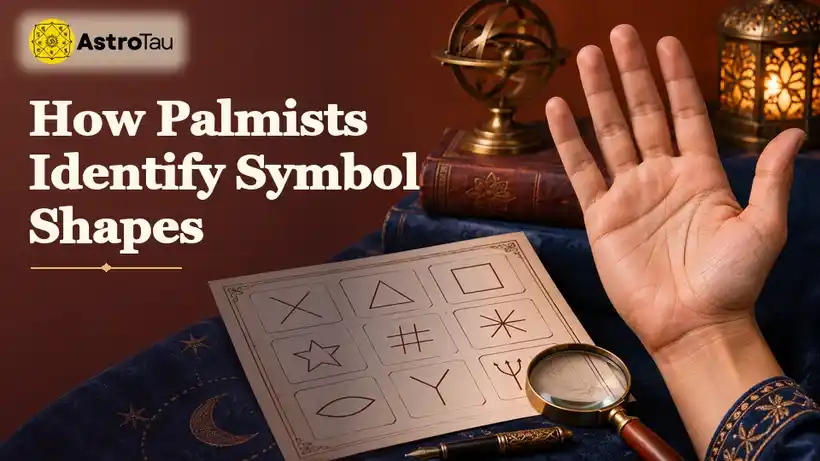
Palmistry shapes such as triangles or branches can be formed by multiple ordinary creases.
A Worked Observation
Trace where the segments start, where they cross and whether you can see a closed shape under diffuse light.
Conditions That Affect Visibility
The relevant information includes the location in relation to major lines before comparing traditional descriptions. For a closer comparison, return to the example in “Compare a closed shape with two unrelated creases” below. It is useful to keep the starting situation visible and write the single condition you would vary. The comparison involves what changed after that adjustment before giving the result a broader meaning.
Influences on a Closed Triangle Before Interpreting It
Trace three visible strokes and establish whether their endpoints genuinely meet. A small break may be hidden by glare, and another crease can make a partial shape look complete. Repeat the sketch under diffuse light and locate it relative to a major line. The question is whether the author's rule depends on a closed triangle, a branch or the specific area of the palm. Keeping uncertain parts visible prevents an outline chosen for its symbolism from replacing the actual fold you observed.
Trace Position Before Naming the Feature
Find a nearby major crease and use it as a reference. Mark where the observed feature starts, whether it continues and where a branch joins it. It is useful to keep uncertain segments separate. A change in visibility can come from the position of the palm rather than the underlying crease.
Both Hands Without Assuming Symmetry
The relevant information includes each hand independently before putting the sketches together. One approach is to use the same light, angle and approximate scale. A feature can be clearer on one side or connect differently with an adjacent crease. If the practitioner gives one hand special weight, record that convention separately.
Look at the Illustration and Method Together
A palmistry diagram can simplify shapes to make the basic landmarks visible. Relevant considerations include that the diagram is naming the same location you recorded. The question is whether the interpretation depends on length, direction, junction or another property. Then compare descriptions that actually use the same feature.
Consistency in Observation and Symbolism Distinct
Write one line about what the photo shows and another about the traditional explanation. A visible fold can be recorded even when no symbol can be assigned confidently. If a reader gives a different name, use the drawing to establish whether both people mean the same line.
A Closed Shape and Two Unrelated Creases
Draw the three lines of an apparent triangle and mark the place where each ends. If one endpoint disappears, view the palm from another angle before declaring that the corners connect. If a fourth line passes through the area, trace that line on its own so the diagram remains readable. The comparison involves the location with the named area in a traditional illustration. A clear account should preserve uncertainty when the shape cannot be traced consistently.
Consistency in a Second Observation Beside the First
The relevant details include the important details of one example before moving to another. For a dream, note the setting, action and point where the feeling changed. For a visible mark, record its location and photograph it from a comparable angle. Explain which detail recurs and which differs. The comparison should show why you are considering a particular interpretation and whether another account also fits. A short raw observation lets you review a new possibility without altering what you actually saw or remembered in the first example.
Feature in Context
Repeat the example under a second viewing angle and note which landmarks remain visible. The comparison involves only the features you can locate consistently. Add the name used in the palmistry method after identifying the position.
Common questions
What is the starting point for understanding how palmists identify symbol shapes?
Palmistry shapes such as triangles or branches can be formed by multiple ordinary creases.
What factors matter before applying this interpretation?
The relevant information includes the location in relation to major lines before comparing traditional descriptions.
KEEP EXPLORING
Tarot and Palmistry Guides
Explore related AstroTau tools and guides.
Explore Tarot and Palmistry Guides ↗