Calculate the same number with and without a prefix
2468013579 sums to 45 and reduces to 9. Add 91 and the total becomes 55, then 10, then 1. Spaces and dashes make no difference to a digits-only calculation.
The calculation or convention
First decide which digits count. A domestic format, country prefix and extension are separate parts of a number. Some numerology methods include all displayed digits and others use only the local number.
Worked example
For a fictional sequence 1234, the sum is 1 + 2 + 3 + 4 = 10 and its root is 1. If you add a fictional prefix 91, the total becomes 20 and the root becomes 2. Record the rule beside both results. To compare a fictional domestic sequence with an international one, show the country code as a separate line of arithmetic. This makes it clear why the results differ when another person chooses to exclude that prefix.
How to compare readings
A phone number also has practical requirements such as memorability and availability. Use fictional or masked digits when explaining a calculation publicly. As a practice example, use a made-up number ending in 24. Calculate the result with the full fictional sequence, then calculate the final pair as a separate exercise. Label each input so a reader can reproduce it. When choosing an actual number, examine practical features such as whether it is easy to dictate and distinguish from a similar number. Treat those requirements independently of the symbolic calculation.
Write out the input rule
Record whether the number comes from a written sequence, a birth date, a name or another source. For letters, record the mapping and the exact spelling. For digit sequences, state which parts count. This ensures another person can reproduce the sum before interpreting it.
Keep intermediate values visible
Write the first total on one line and the reduction on the next. If your method retains a compound or master value, name that rule. Compare a second method only after showing where its steps differ. Two calculations can share a final root while emphasizing different intermediate values.
Apply symbolism to a defined question
Choose a situation that can be described concretely, then write what the symbolic theme helps you ask. For instance, a prompt about cooperation might lead you to check who contributes to a task. Compare your answer with actual circumstances and record one example where the theme is less useful.
Compare prefixes and punctuation with a fictional sequence
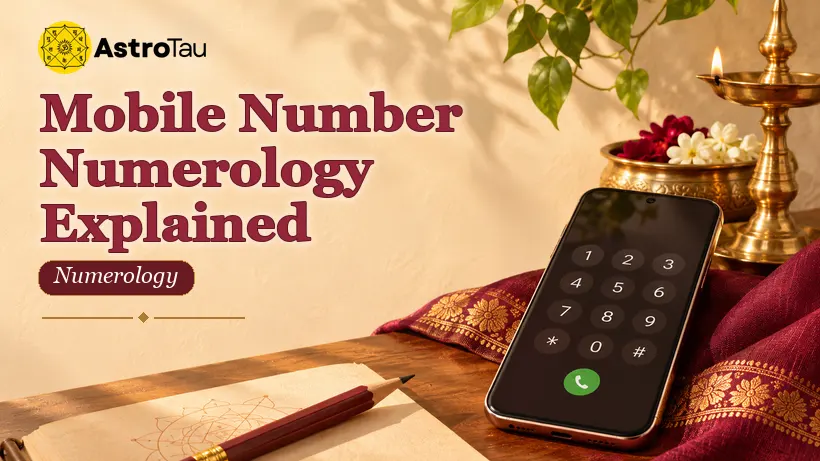
The digits in 2468013579 add to 45 and reduce to 9. Adding the country-code digits 9 and 1 changes the sum to 55, then 10, then 1. Spaces, hyphens and leading zeroes have no effect under a simple digit sum. Before comparing tools, note whether they add or strip a country code. Use a fictional sequence for public examples and keep the choice of mobile service separate from the arithmetic.
Compare a direct root with a compound result
The sum 55 can be written as 55 → 10 → 1. If a guide retains compound totals, keep 55 and 10 on the worksheet so someone else can follow the path. A guide using only 1 would group this with other sums that reduce to 1. Ask whether the tool changes the input before reducing it. A difference in output may come from preprocessing or from the interpretation rule.
Enter 2468013579 and keep a record of every digit contributing to the total of 45. A calculator that adds the prefix 91 begins from 55 instead. Hyphens and spaces contribute nothing when the tool drops punctuation. Compare the number shown on screen with the input it actually counts, since some forms add the country code automatically. Then ask whether a compound-reading method keeps 45 or 55 alongside the final root. You can compare the arithmetic without sharing a real number or treating the result as a reason to change service.
Common questions
Should I include the country code?
Use one stated convention and apply it to all numbers you compare. The prefix can change the arithmetic.
Can two methods return different numbers?
Yes. Different spelling rules, reduction order and treatment of master numbers can change the reported value. Compare the calculations before comparing their symbolic meanings.
KEEP EXPLORING
Numerology Guides
Continue exploring this topic with AstroTau.
Explore Numerology Guides ↗