The label is a traditional category
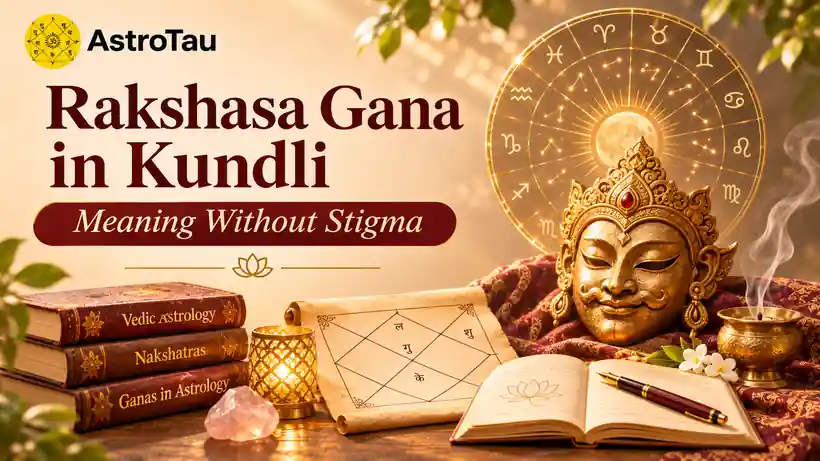
Rakshasa Gana is one of three nakshatra groupings used in some Jyotish matching methods. It should not be translated into a claim that someone is evil, violent or unfit for marriage. The classification generally comes from the Moon's birth nakshatra. It belongs to a symbolic system and cannot measure moral character, personal safety or the quality of someone's relationships.
Read the associated qualities carefully
Popular interpretations connect this Gana with independence, intensity, strong preferences or willingness to challenge convention. Those themes can be expressed constructively or unhelpfully, just like traits attributed to other groups. A person who values autonomy may also be thoughtful and cooperative. The category does not erase that complexity, and it should never substitute for evidence about how the person treats others.
Know what a Gana score includes
In Ashtakoota matching, Gana Koota compares two lunar categories under a chosen scoring scheme. It does not use every factor in the birth charts. A numerical result therefore needs explanation rather than being treated as a complete verdict. Ask how the practitioner weighed Gana against other factors and whether the same rules were used when calculating both partners' results.
Check the wider lunar picture
The Moon's zodiac sign, occupied house, its ruler and planetary aspects may alter the traditional interpretation. A chart with supportive influences can be read differently from a chart with a different set of pressures even when the Gana label matches. The point is not to invent a more elaborate certainty; it is to understand why one broad category cannot summarize an entire person.
Translate a theme into a real question
If independence is the theme that resonates, ask what each partner expects regarding friendships, work decisions and time alone. If intensity is the concern, discuss how disagreements are handled and whether boundaries are respected. Those are observable relationship matters. A conversation produces more useful information than assuming that a Sanskrit label has already explained every disagreement or supplied permission to ignore it.
Protect dignity in family discussions
If relatives use Rakshasa Gana as an insult, separate the technical category from the accusation. Request a neutral explanation of the tradition, but make clear that the person should not be shamed. Consenting adults retain the right to make their decisions. A responsible practitioner can discuss matching uncertainty without amplifying fear, encouraging discrimination or selling a remedy as a way to make someone socially acceptable.
Reading Rakshasa Gana without a hierarchy
Rakshasa is a traditional Gana classification, not a statement that a person is dangerous, inferior or unsuitable for ordinary relationships. A person may identify with independence or strong preferences without fitting a negative stereotype attached to the category name. Keeping the calculation visible makes it possible to distinguish the underlying observation from the interpretation added to it. It also makes disagreements easier to resolve: first check whether the same inputs and definition were used, then compare what each reading concludes.
For a question about Rakshasa Gana in kundli, begin with one clearly defined aim. You may be trying to identify a formation, understand a relationship factor or compare a timing method. Those tasks need different information. Write the question in one sentence and keep it beside the calculation. If an answer moves to a different subject, such as discussing a transit when you asked about a birth placement, return to the original question before deciding what the answer establishes.
The details to check before drawing a conclusion
The first check in this topic is assignment. The other items below show why a short label cannot replace a full explanation. A reader should be able to identify the input, follow the relevant count or classification and see how the interpretation relates to the question. When one of those steps is missing, keep it as an open item rather than filling the gap with a confident prediction.
| Detail | What to verify |
|---|---|
| Assignment | based on the birth nakshatra |
| Framework | one of the Deva, Manushya and Rakshasa groups |
| Matching role | one factor within a wider system |
| Personal assessment | behavior and expressed preferences matter more than a label |
Turn the reading into a useful next step
Apply the example of Rakshasa Gana in kundli in two passes. In the first pass, record only the information that can be checked: a sign, house, longitude, period length, classification or practical requirement. In the second, write the meaning proposed for that information and the additional conditions it depends on. This keeps a symbolic explanation distinct from the underlying measurement. It also prevents a broad description from appearing more specific merely because it includes an unfamiliar technical word.
Finish by identifying one question that would improve the reading. For this guide, useful questions include whether the stated assignment is correct, whether the remaining checks have been completed and whether the example genuinely matches your situation. A proportionate next step might be correcting birth details, comparing the same method in two tools or discussing a practical expectation with someone involved. A longer reading is valuable when it clarifies these decisions, rather than adding more labels to an already uncertain conclusion.
Common questions
Does Rakshasa Gana mean bad character?
No. It is an astrological grouping, not a moral judgment or evidence of harmful behavior.
Is a match across different Ganas impossible?
No. Traditional methods differ, and real compatibility cannot be reduced to whether two people share a Gana label.
KEEP EXPLORING
Explore traditional compatibility
Compare the calculated matching factors and read them alongside communication, consent and real-life compatibility.
Explore Kundli Matching ↗