Check what the ruby report answers
Compare whether the stone is natural or laboratory-grown and what treatments are disclosed. Inspect the mounting separately. A Jyotisha recommendation linked to the Sun answers a different question from material identification or day-to-day care.
Traditional context
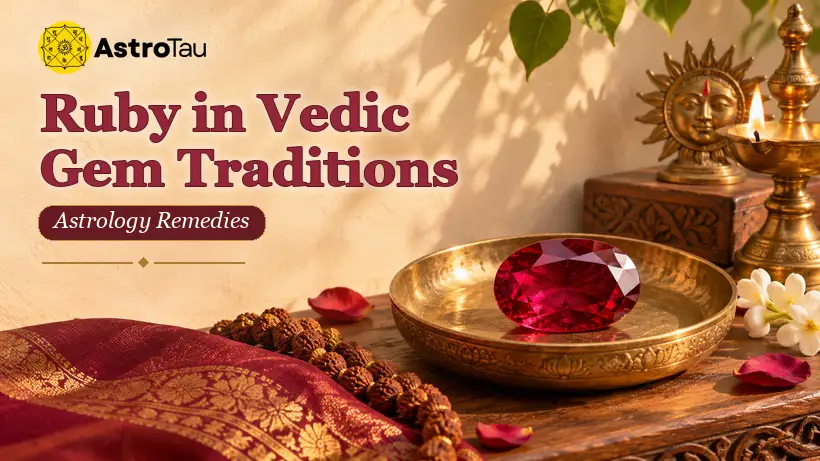
Ruby is red corundum and is traditionally associated with the Sun in Jyotisha. Colour, origin and treatment are separate details. A seller's description should say which features have been established.
A practical example
Ask whether the stone is natural or laboratory-grown and whether it has been filled or otherwise treated. Show the treatment description to a jeweller before choosing a cleaning procedure. For jewellery care, record the type of setting and the treatment information beside the material name. Ask the seller for compatible cleaning advice, especially for an item with an unknown history or visible damage.
Checks before adopting a practice
A ring, pendant and loose gem face different kinds of contact. Check the setting and keep the material description with the care instructions. An occasional pendant and a ring worn throughout the week are exposed to different conditions. Ask how the mounting protects the stone and how the disclosed treatment affects care. Keep a copy of the material description and any report. If ruby’s traditional Sun association is important to you, record where the recommendation came from so it can be considered separately from the seller’s description.
A second example
Compare two pieces with the same red appearance but different disclosures. One may be described as laboratory-grown, while another may have a treatment that affects cleaning. A useful description states those details before discussing the price or the symbolism. For routine wear, ask about the setting and any specific precautions. An unidentified filled or composite stone needs different assessment from a documented piece.
Read a jewellery description carefully
Record the material name, whether the item is a single stone or a set of beads, and whether the seller has disclosed a treatment. Ask what the setting or cord is made of. Colour, a trade name and a devotional association can each appear in a description without establishing the material's identity.
Compare two ways of wearing it
A ring frequently comes into contact with handles and desks. A pendant may be less exposed to those contacts but can still strike another item or catch on fabric. Compare how each setting protects the material and whether it fits the wearer’s ordinary activities. Ask for cleaning instructions for the specific piece, including any setting or treatment concerns.
Keep care guidance with the object
Write down the treatment description and the cleaner or method the jeweller recommends. Check before using heat, steam or ultrasonic equipment on an unfamiliar piece. A gemstone’s durability and any treatment affect how it should be cleaned. This information is separate from the traditional meaning that led you to consider the item.
Compare documents before judging colour alone
Ask whether the ruby is natural or laboratory-grown and which treatments have been disclosed. Then check that the setting suits the intended use and ask for care guidance. If the purchase follows a Sun-related recommendation, ask about the chart premise and any recognized alternatives. A vivid appearance does not establish the material’s origin, condition or treatment history. Ask whether it identifies natural or laboratory-grown material, whether treatments are disclosed and how that affects care. Then consider how much of the ruby will be exposed when worn. A ring on a frequently used hand and a pendant worn occasionally have different practical requirements. If a Jyotisha source recommends ruby in a Sun-related reading, ask what placement supports that suggestion and whether other choices fit the stated purpose. Keep the report with the object for future cleaning or repair.
Common questions
Can I clean any ruby the same way?
Treatment and setting can change suitable care. Ask a jeweller when either is uncertain.
KEEP EXPLORING
Astrology Remedies
Continue exploring this topic with AstroTau.
Explore Astrology Remedies ↗