Identify the sacred image from remembered features
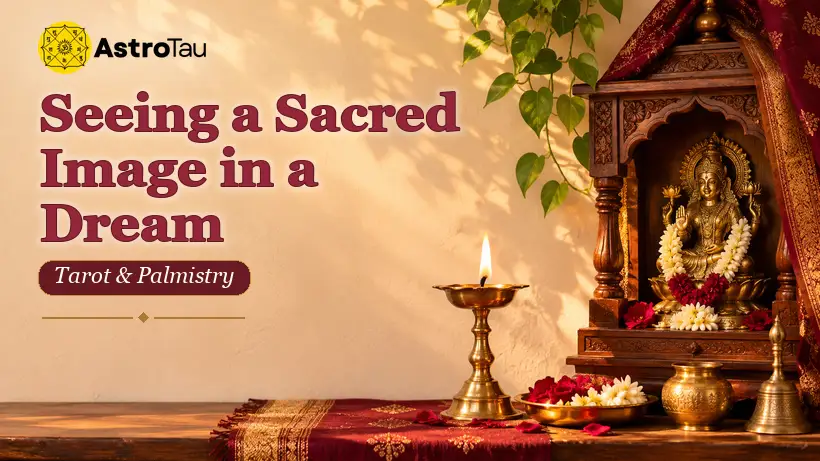
Write down the posture, any object held, colours and surroundings before searching for a name. A figure beside a home lamp can recall an altar or calendar print. Compare the visible features with a description from your tradition and note which details are too uncertain to identify.
Recognizing the symbol or pattern
A sacred image can recall a place, a person or an ordinary devotional routine. The first step is to describe the image as you remember it, including the setting and the emotion it produced. Then distinguish your association from a meaning described in a religious text. A dream of a familiar temple may bring back the sound of a ceremony or a visit with a relative. Write down that memory and see whether it suggests a conversation, a journal entry or a quiet devotional practice you already value.
The same image can carry a public devotional meaning and a private association. A shrine remembered from childhood may bring a particular person or place to mind. Notice which association arose before looking for a traditional interpretation.
Limits of the interpretation
If your family or teacher has an interpretation, record the context in which they give it. A practice that is meaningful in one tradition can have a different role elsewhere. Avoid turning a single remembered scene into an obligation.
A second example
If a sacred image reminds you of someone who introduced you to a practice, write down the memory it brought back. You could revisit a familiar text or ask a relative about that visit. The next step can be meaningful even when you are unsure why the image appeared. Compare your personal association with the way a community describes the image. If you encounter a formal ritual instruction, ask whether it belongs to a specific observance before using it in response to a dream.
Record the remembered scene
Write three separate notes for the setting, your action and the emotion you remember. Use short descriptions of what actually appeared. If you later remember an extra detail, date that addition rather than treating it as part of your first account. This gives you a clearer record of what you are interpreting.
Compare two plausible associations
Think of one recent ordinary experience that might have supplied the image and one personal association you have with it. Look at how each explanation fits the actual action in the scene. If neither fits well, leave the detail unresolved. A symbol can hold several possible meanings, particularly when the dream combines memories from different settings.
Use the interpretation to ask a question
Write a question about your own experience rather than about what will happen to someone else. You might ask what you wanted to do in the scene or what made the situation feel uncertain. Choose a low-pressure way to explore that question, such as a short journal entry or a conversation about the actual situation.
Identify what made the image recognizable
A dream image can resemble a home altar, a calendar print or a temple image without matching it exactly. Note which features you remember clearly, such as posture, surroundings or a particular colour. Separate those details from what you inferred after waking. If the image reminds you of a tradition you practice, talk to someone familiar with that context or consult a description you trust. If the resemblance is personal, record what the setting brought to mind. These two lines of reflection can coexist without assigning a single interpretation to the dream.
Sketch or list only the details you remember, including posture, colours and nearby objects. A home altar image may resemble a calendar print even if the setting in the dream is unfamiliar. Compare the details with a source from the relevant tradition or ask someone who knows the image. Keep any uncertain feature marked as uncertain. If the scene reminds you of a family member or a recent visit, record that separately. A resemblance to devotional imagery and a personal association can both be part of the dream without requiring the same explanation.
Keep the account and the interpretation in separate notes
Write what you remember before looking up the image. Include the place, lighting and what you were doing when it appeared. Then write possible associations from your own life, such as a family ritual, a recent visit or something you saw in a book. If someone offers a devotional interpretation, record it with the tradition or source it comes from. You can compare that explanation with your own associations and preserve both. This is especially useful when the image contains only a few recognizable features and could resemble more than one figure or place.
Common questions
Can I use a dream for devotional reflection?
Yes, if it fits your practice. Use it to recall what the image means to you and choose a small action you are already comfortable taking.
How can I use the interpretation?
Use it to identify a question worth reflecting on. The scene or symbol alone cannot establish an event or another person’s private thoughts.
KEEP EXPLORING
AstroTau Journal
Continue exploring this topic with AstroTau.
Explore AstroTau Journal ↗