The setting of the Aditya Hridaya
The Ramayana places the hymn in a scene before Rama’s battle, with Agastya teaching it to him. Read the scene alongside the hymn to distinguish the narrative purpose from the solar names repeated in the recitation.
Meaning and background
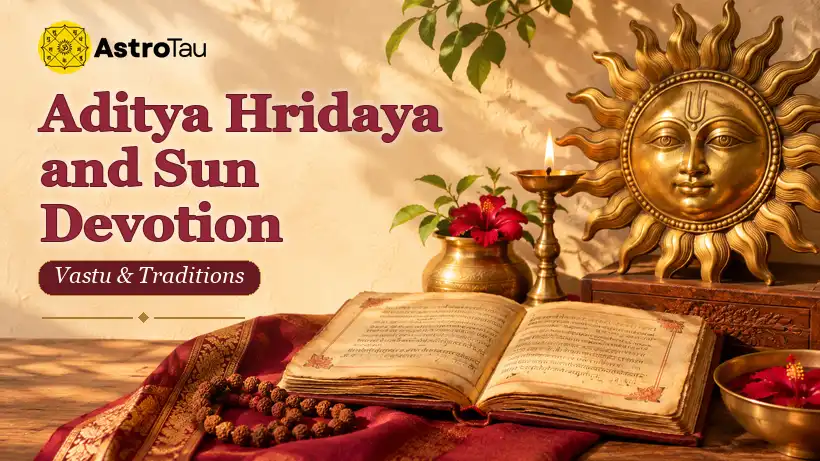
Aditya Hridaya is presented in the Ramayana's battle narrative as a hymn to the Sun taught to Rama by Agastya. Reading the setting helps distinguish the story from a modern observance. Locate the passage where Agastya teaches Rama the hymn before battle. Then identify where your edition moves from narration to solar praise. Choose one recurring epithet and compare how another translation renders it. If a recording is longer than the written passage, check for introductory or closing verses. A devotional reading can focus on the act of recitation, while a study reading can follow how the passage addresses the Sun and why it appears at that point in the story.
How the custom can be approached
Open a known edition at the scene before the hymn. Note who is speaking, what Rama faces and the themes developed in the verses. Compare a translation with the recitation you plan to use. Reading the surrounding battle narrative gives the hymn a setting and helps explain why the Sun is invoked at that moment. Compare the scene and the devotional practice without assuming that every modern recitation follows the same sequence.
What varies by setting
A community may have its own time or sequence for recitation. Ask about those details separately from questions about the text itself.
A second example
When studying the hymn, read the scene immediately before it and identify Agastya and Rama's roles. Then compare what the passage says about the Sun with a summary written for devotional use. The surrounding story can clarify an image that looks isolated in a quotation. If you want to recite it, ask which text and pronunciation guide your tradition uses. Learn a short passage before joining a longer routine.
Reading the story and the association separately
A mythological episode can have a narrative purpose, a devotional use and a later astrological association. Start with the source that describes the story. Note the participants and the setting before comparing a planetary interpretation. This helps you see whether two accounts tell a different version of the story or draw different associations from the same scene.
Comparing two traditions
Keep a simple note for each account with the source, language and observance in which it is used. Record the name of the deity or form and the specific association being made. If the lists differ, compare their purposes. A set of pairings used to organize an observance does not define the order used by every household or the interpretation of an individual birth chart.
Choose between a narrative reading and a recitation exercise
In the Ramayana setting, Rama receives the hymn before battle. A reader following the story can note where the scene ends and the hymn begins. A reader learning the recitation can focus on pronunciation, cadence and the version used in their tradition. Compare one recurring solar epithet across translations and check whether a longer recording includes framing verses or a separate introduction.
Identify the source when comparing wording
An edition may use a transliteration alongside a translation, while a recording can use a pronunciation convention learned orally. When a line sounds different, check what each source includes and where it begins. Reading the story around the hymn can explain why the Sun is addressed in that setting. Keep a short note of the version so you can discuss a specific verse with someone familiar with the tradition.
Common questions
Where should a beginner start?
Start with the narrative context and a short passage in a reliable edition.
KEEP EXPLORING
Vedic Astrology Guide
Continue exploring this topic with AstroTau.
Explore Vedic Astrology Guide ↗