What changes between a candle and a spreading fire?
Compare who lit it, who could put it out and what happened afterward. A controlled flame supplies warmth or light. An uncontrolled fire introduces danger and a decision about leaving or getting help.
Recognizing the symbol or pattern
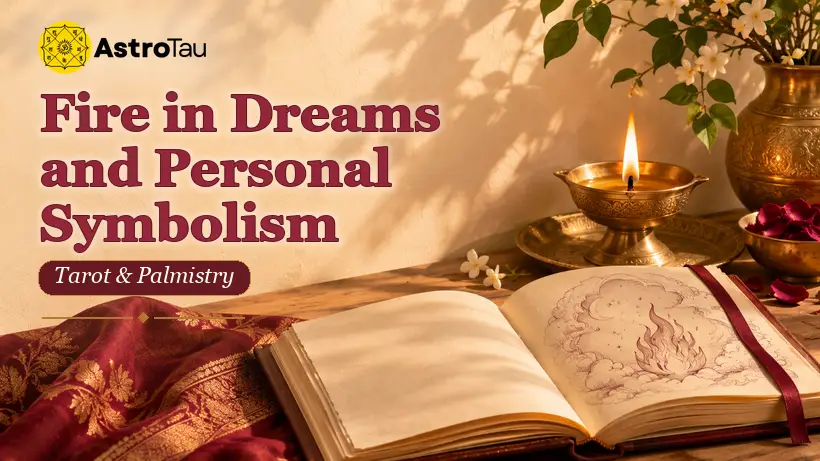
Fire takes different roles in a dream. It can provide warmth, mark a ritual or spread beyond anyone's control. Note its container and your distance from it before choosing a symbolic description.
A worked observation
Compare a diya you deliberately light with a stove you cannot turn off. The first scene involves an intended act. The second may bring a forgotten responsibility or concern about safety to mind. Note the object that held the flame. A diya suggests a contained and deliberate light, while a fire spreading into another room involves a loss of control. Think about what in the scene mattered to you before interpreting it.
Limits of the interpretation
Use a description of the setting and your response before comparing with a dream dictionary. A personal memory can explain why a particular flame stood out. Compare a flame that lights a room with one that blocks a route out. Note whether the dreamer approached it, watched it or tried to put it out. The response can make a useful difference even when the visual symbol is the same. If a recent ritual, cooking task or news story supplied a similar image, write it down. Keep the ordinary explanation alongside any personal association you explore.
Record the remembered scene
Write three separate notes for the setting, your action and the emotion you remember. Use short descriptions of what actually appeared. If you later remember an extra detail, date that addition rather than treating it as part of your first account. This gives you a clearer record of what you are interpreting.
Compare two plausible associations
Think of one recent ordinary experience that might have supplied the image and one personal association you have with it. Look at how each explanation fits the actual action in the scene. If neither fits well, leave the detail unresolved. A symbol can hold several possible meanings, particularly when the dream combines memories from different settings.
Use the interpretation to ask a question
Write a question about your own experience rather than about what will happen to someone else. You might ask what you wanted to do in the scene or what made the situation feel uncertain. Choose a low-pressure way to explore that question, such as a short journal entry or a conversation about the actual situation.
Read the event in stages
A candle, a fire spreading across a room and the aftermath put you in different positions. Describe who started the fire, who could act and what needed attention. A recent event may feel similar because you had to decide whether to intervene or ask for help. Compare that choice with the dream before connecting the flame itself to an idea about change. Finding smoke before you see a flame gives you a different task from cleaning a room after the fire is out. At each stage, ask what you knew and what you could do. In a controlled fire, identify who tends it and why. In an emergency, notice whether your role is to leave, warn someone or protect an object. Then compare the emotional peak with a recent event that involved the same responsibility. A connection based on a specific decision is more informative than equating every flame with change.
Distinguish temperature from danger
Warmth from a cooking fire may be welcome, while the same heat in a closed room might make you look for an exit. Write whether you could control the source, whether anyone depended on you and what changed by the end. Compare those details with a recent situation where you felt responsible for containing a problem. If the dream felt pleasant, consider whether the connection is comfort or activity rather than risk.
Common questions
Do fire dreams always represent anger?
No. The dream context can suggest warmth, attention, fear or another association that fits the scene.
How can I use the interpretation?
Use it to identify a question worth reflecting on. The scene or symbol alone cannot establish an event or another person’s private thoughts.
KEEP EXPLORING
AstroTau Journal
Continue exploring this topic with AstroTau.
Explore AstroTau Journal ↗