Cultural Background
Stories involving Saraswati and Brahma have multiple versions and distinct devotional contexts.
Practice
The starting point is a version you can identify, then list the speaker, action and consequence it gives instead of merging two retellings.
Variations in Observance
When comparing iconography, a veena belongs to a different kind of description than the narrative reason given for a curse. For a closer comparison, return to the example in “Compare the evidence of a caption and a story” below. It is useful to keep the starting situation visible and write the single condition you would vary. The comparison involves what changed after that adjustment before giving the result a broader meaning.
Two Retellings Without Merging Their Episodes
Write the speaker, the stated reason for the curse and what follows in each version. A passage about an interrupted ritual and one about a separate disagreement may share names while describing different episodes. Preserve those differences when explaining either story. Read an image using visual details such as a manuscript, a veena or the setting, then check which details belong to the text you are discussing. Artwork can identify a deity without illustrating the exact episode you have in mind.
Iconographic Details to Identify the Subject of
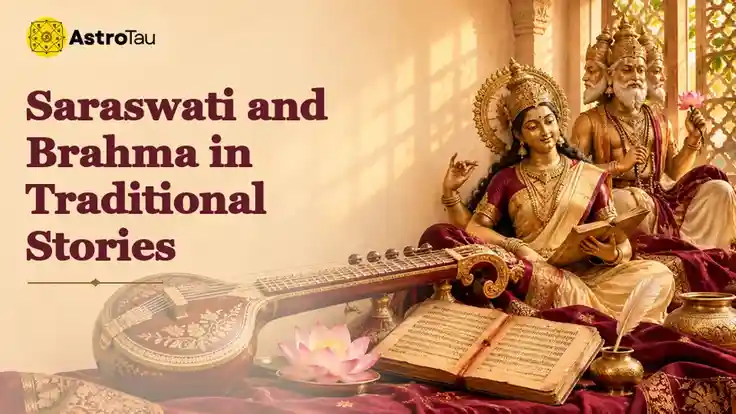
A figure with a veena and a manuscript can direct attention to Saraswati's relationship to learning and music. If an image includes Brahma, locate how the figures are arranged and whether anything else identifies a particular episode. Do not give artwork a narrative caption until the story is recognizable. A description such as manuscript or instrument is useful even when the episode remains uncertain. When sharing a version of a story, identify it so readers can distinguish its sequence from a different telling.
Traditional Sequence
If one instruction changes from family to family, consider whether it concerns the beginning, main action or end of the observance. Follow a single documented sequence when learning it. It is useful to keep a note of any pronunciation, translation or timing question you want to ask the person who taught it.
Practical Considerations
Confirm what time people can attend, who is preparing the items and how the location can be used safely. The question is which elements are essential to the observance and which may be adapted. Agree on these details before inviting someone who has learned a different version of the custom.
Key Distinctions
A concise note can record what you observed, what the family or text calls it and which aspect you intend to follow. If another account differs, locate the exact step that changed. It is useful to keep both accounts recognizable rather than blending individual instructions into a new rule.
Evidence of a Caption and a Story
A caption can identify Saraswati by an instrument or manuscript, while the text of a particular story can establish what Brahma says or does. Choose one account and note whether the episode even includes the same objects shown in a picture. If the picture lacks the setting or another distinctive figure, it may represent the deities generally. When preparing an explanation, describe the image based on what you see and tell the story based on its chosen version. The details can be compared without borrowing the ending from another retelling.
Regional and Cultural Variations
Choose one actual occasion and identify who is taking part, what objects are involved and which steps belong to the custom being described. The question is the person leading it which parts can change when the place, materials or available time are different. For a story or image, instead record the version and physical setting where you encountered it. It is useful to keep that information with the account rather than combining instructions from unrelated situations. The result should tell someone how to recognize this version and which details they would need to confirm before following it.
Bringing the Details Together
One approach is to use the example to identify the part of the custom you intend to observe. The relevant information includes the materials, place and sequence, then confirm any detail that is specific to the people taking part.
Common questions
What is the starting point for understanding saraswati and brahma in traditional stories?
Stories involving Saraswati and Brahma have multiple versions and distinct devotional contexts.
What factors matter before applying this interpretation?
When comparing iconography, a veena belongs to a different kind of description than the narrative reason given for a curse.
KEEP EXPLORING
Vedic Astrology Guide
Explore related AstroTau tools and guides.
Explore Vedic Astrology Guide ↗