Check whether an X is actually two crossing lines
Trace both strokes beyond the junction. One may be part of a major crease and the other a smaller crossing. Photograph the palm under the same light on both sides and note where the mark sits before comparing traditional labels.
Recognizing the symbol or pattern
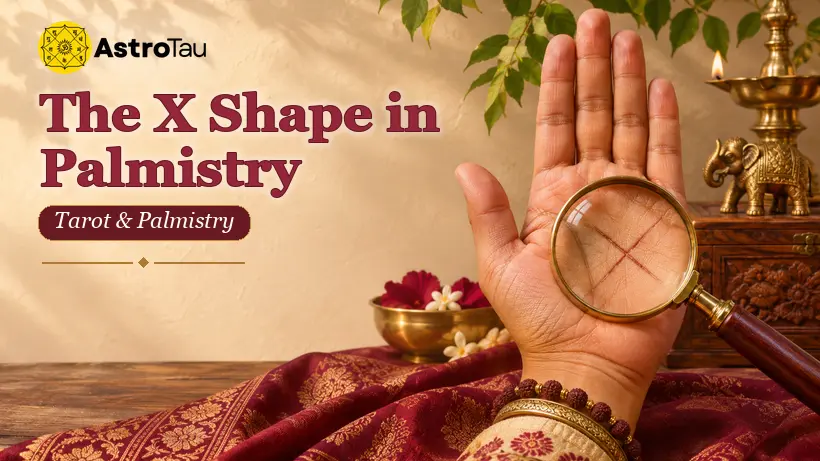
An X pattern is a visible intersection of two creases. In palmistry the position relative to main lines may influence what a reader calls the mark. A small crossing can differ from a large intersection. Make a close drawing and mark the length and angle of each line. Check whether the apparent X remains visible when you relax the fingers. Record which major crease, if any, each branch belongs to. Describe the angle and length of both crossing lines. A large intersection formed by the main creases can look quite different from two faint short creases. Clear observation makes it easier to compare a second reader's classification.
Limits of the interpretation
Different diagrams draw region boundaries differently. Identify the mark's location with reference to actual creases so a second reader can understand what you observed.
A second example
Choose one visible intersection and mark which line passes through it. Then describe a nearby intersection separately. The two may look like an X but have different sizes and relationships to the principal creases. When comparing illustrations, use the physical position rather than simply matching the symbol name. Keep uncertain marks visible on the drawing.
Use consistent observation conditions
Rest the hand in a comfortable position under a steady light. Record the side of the hand and the position of the mark relative to nearby major creases. A small sketch can be easier to compare than a photograph taken from an angle. Make the first record before reading an interpretation.
Describe changes in visibility
Compare the same area from a second angle or with the hand relaxed again. A mark may be clearer when the skin is stretched. If you compare both hands, give each its own sketch and do not move a line from one drawing to the other because they look similar. Keep unclear marks labeled as uncertain.
Identify the reading convention
Different palmistry diagrams can divide the same area differently. Note the name of the convention and which physical feature led you to use it. The drawing is your observation and the interpretation is an additional layer. Keeping those separate makes it easier to discuss a disagreement about the pattern.
Describe the two strokes before naming the mark
Rotate the hand slightly and note whether both strokes remain visible. Trace each across the apparent X and mark whether it belongs to a larger crease. Compare with other crossings on the same palm to see how common the shape is. A traditional description may attach importance to a named area, so retain the exact position and viewing angle in your notes.
Compare a stable crossing with a change in posture
Make one photograph with the hand relaxed and another with a small change in finger position. If the crossing is visible in both, mark its location relative to the closest major crease. If one arm disappears when the palm relaxes, describe that difference. The comparison helps you identify which mark a reader is discussing and whether a traditional diagram represents the same feature. Take one photo with the fingers relaxed and compare another after slightly adjusting the light. Mark which of the two strokes comes from a major crease and which appears smaller. If only one stroke persists across both views, keep the identification open. Then locate the crossing relative to the fingers and other main creases. Traditional meanings can change with the named area, so recording the location is as important to the comparison as describing the shape itself.
Common questions
Does every X have one interpretation?
No. The conventions depend on its location and how the reader classifies the crossing.
How can I use the interpretation?
Use it to identify a question worth reflecting on. The scene or symbol alone cannot establish an event or another person’s private thoughts.
KEEP EXPLORING
AstroTau Journal
Continue exploring this topic with AstroTau.
Explore AstroTau Journal ↗